By Max Bowen
“Five By Five” is the name for our series of written Q&A interviews with writers and musicians. The name actually refers to audio signals, which ties in with our regular podcast. Five By Five is another way to say “good signal strength” or “loud and clear,” but can also mean “exceptional quality,” which certainly lines up with the artists we speak with. Now with that out of the way, on to the book!
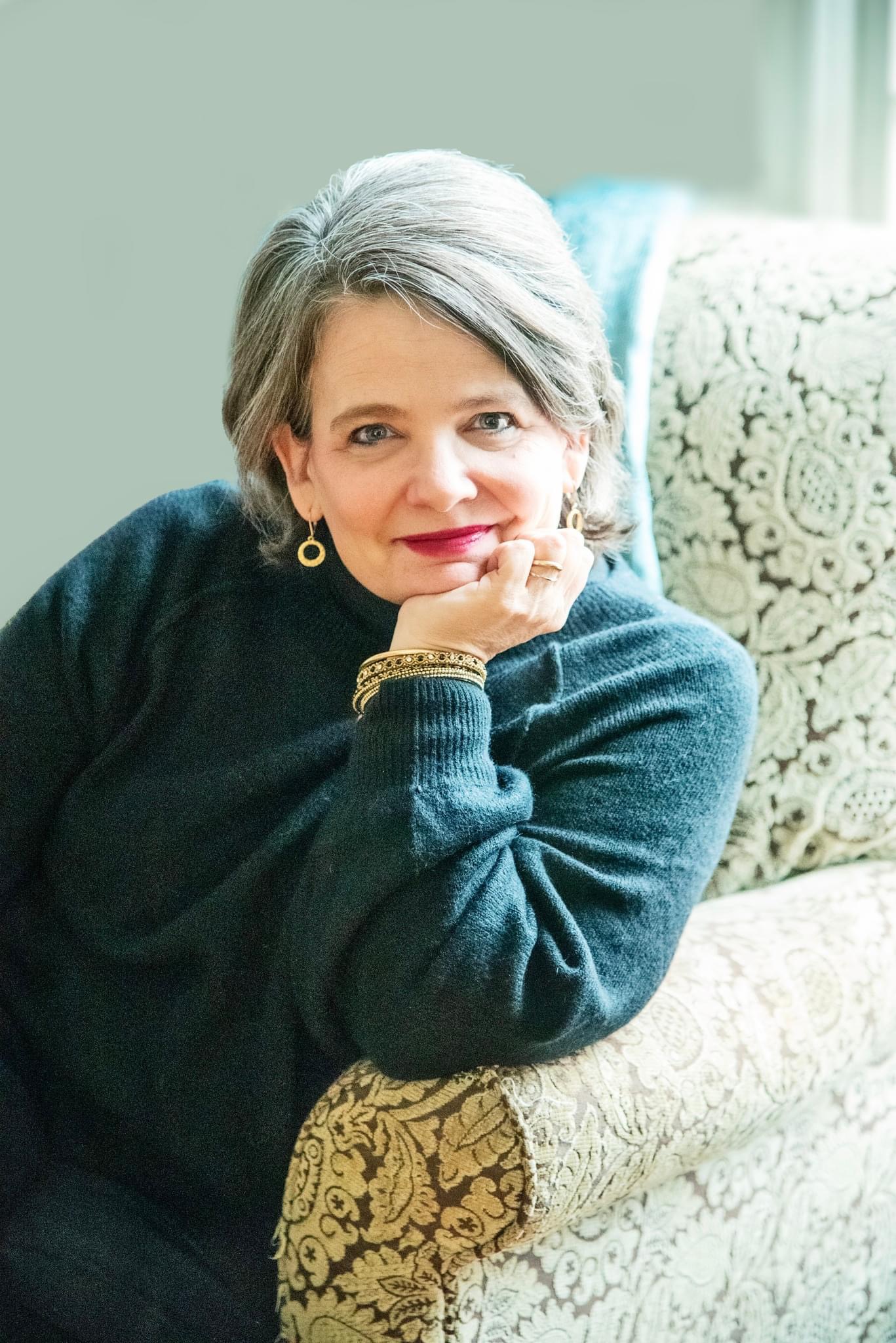
Anne Heinrich’s debut novel “God Bless the Child,” (June 7, 2024, Speaking Volumes) grew from a single story into a three-book series, and in this interview, she speaks
on how it started and diving back into the story years later. She also talks about the alternating viewpoints the story takes as it spans across two women’s lives. We also go into the different topics she goes into that surround motherhood and what we can expect next.
Here’s a look at the story synopsis:
Mary Kline has always confronted the challenges of her obesity and infertility with unyielding determination, refusing to succumb to societal expectations. But she desires one thing above all; a child of her own. When her vulnerable friend Pearl unexpectedly finds herself pregnant, Mary steps forward as both caregiver to Pearl and guardian to her child, Elizabeth. Mary sees an opportunity in motherhood to heal the wounds of her own loveless past, but Elizabeth resents Mary, finding her repulsive and stifling her upbringing. As the years pass, Elizabeth grapples with unresolved anger and struggles with her mental health, seemingly destined to repeat the same mistakes with the family she makes for herself. Can Elizabeth break free from the pains of her adolescence finding forgiveness for her mothers' shortcomings, in order to become the mother she’s always wanted?
I read that this book was 18 years in the making. How did you develop it over that time?
When I started writing this and collaborating with an editor, our youngest daughter was only 3 years old and too little to get on the school bus for preschool in the next town. I scratched the first draft of “God Bless the Child” on a stack of yellow legal pads three afternoons a week in a little café while she went to her school. I finished the draft and even started pitching to agents, but life as a working mother to three children kept getting in the way. I let the manuscript sit in a drawer for quite a while but did find myself sneaking away when I could to write new stories. It always felt self-indulgent.
My children are grown, and I decided to reach out to my editor to see if he would give my new stuff a read. He agreed and encouraged me to pull the finished novel out of the vault. I did. It needed a little more work, but still had legs. He thought it could be pitched, along with some of the new pieces I’d written, as a three-book series. Things happened quickly after that. We found an agent, and just months later, I had a contract with a traditional publisher. I like to think that the timing was just better this time around. The universe said yes!
Who are the alternating viewpoints?
The story unfolds over three generations, with staggered viewpoints of the primary characters throughout. The plot is not presented in a linear fashion, so the reader must pay attention to who’s doing the talking and what they are revealing. The chapters are shared by the book’s two primary characters, Mary Kline and her surrogate daughter Elizabeth, along with a host of other characters who drive the story forward and backward in their own distinctive voices. Some of the chapters are long, and others quite short.
Other characters who get a fair amount of real estate, or voice, in the book are David, Elizabeth’s husband; Little Mary, Elizabeth’s and David’s young daughter; Johnson Kuhlman, a quirky bystander who become essential to the plot and provides equal shares of solid observation and comic relief; and James Pullman, the pastor’s son, whose unwise dalliances with a vulnerable young Pearl Davis, Mary Kline’s only friend, lead to the a central plot line.
How did you combine them and how does this drive the story?
When I started the manuscript, I just let things spill out onto the page, and put shape to it over time. This is a character-driven story, and the way the narrative builds demonstrates just how deep and wide the shelf life of trauma can be for families. Some of the minor characters were created expressly to answer questions, provide a back story, or just move characters across town. I’ve been able to do a fair amount of what I would call “taking care of business” that a book just must have with dialogue and memory sequences, too. It is just as interesting to consider the characters who are essential to the plot but have no voice at all.
What are some of the topics you take on in this book and how are they presented?
A theme throughout the book is a complicated set of questions around the definition, nature and nuances that define motherhood. None of the characters in God Bless the Child have particularly good mothers and they are flawed as mothers themselves. There is an abortion and some intimate scenes that are visceral, but not gratuitous or loaded with judgement. In fact, these pivotal moments in the story are tucked in tight right next to other harsh, sad realities that exist when children are placed in the care of adults who are ill-equipped to nurture and love in ways that are natural or socially acceptable.
There is a fair amount of emphasis on parents (both biological and adoptive) who are driven by their own needs and desires rather than what is best for the children in their care. The book delves into mental health issues, abuse and even challenges the sanctity of places and people who should be safe harbors for the vulnerable — but often are not. All the characters grapple with the choices they have made, as well as those that have been thrust upon them by others. I think the story has the potential to lead to rich and necessary conversations about love, loss and forgiveness at a time when we’re craving connection more than ever.
This is your debut book. Are others planned?
Yes. “God Bless the Child” is the first in a three-book series to be published by Speaking Volumes. The series is called “The Women of Paradise County.” Book Two, “Violet Is Blue,” will release in June 2025, to be followed by Book Three, “House of Teeth.” I have a healthy start on another stand-alone novel, “A Room for Candace,” but will not be diving back into that one for a while.