By Max Bowen
In “She Journeys,” (Sept. 9) author Sarah May embarks on a profound journey to reconcile the wounds of her young marriage: infidelity, abuse, and assault. Personal transformation meets adventure, spirituality, and love in this inspirational testament to rebuilding after ruin. Eventually selling everything to live in a van, Sarah is now one half of the Authors on Wheels duo.
In this Five by Five interview, Sarah talks about the choice to publish this decision, the relationship she left behind, and the journey that followed.
What led you to share your story in this way?
I’ve kept a daily journal since I was a teenager, so writing has long been my way of processing, reflecting and making meaning. The desire to write a whole book was approached as an act of self-love to heal more deeply. But writing required me to ask the hardest questions I’ve ever asked myself, to get vulnerable, messy and brave as I came face to face with my own shadows. The process was radically transformative, rage inducing and ultimately, revolutionary.
How were you able to get out of this relationship?
Leaving was one of the hardest things I’d ever done. I was only 23, but I thought my life was over. I stayed too long in a marriage that was poison. The longer I stayed, the more I harmed myself. I have so much compassion for that girl who thought that was love. I tolerated betrayal, lies and abuse all culminating in a night that could have ended with one or both of us dead. After that, even though I was devastated, I realized leaving was my only option. I saved my own life when I left that one behind.
What’s your advice for others in your situation?
What I would tell my younger self: I’m so sorry for your pain and heartbreak. To love so much is a sign of your big heart. But darling, love shouldn’t hurt like this, shouldn’t render you hollow from the inside out. Leaving is not betrayal, it’s the first step of honoring yourself. This pain won’t last forever, a life can be rebuilt, often more wonderful than you can imagine. To see the situation with clear eyes you have to stop lying to yourself. If you had a daughter and she was in your position, what would you want for her?
What was your healing journey, and how are you today?
My journey has been long, winding, challenging, and glorious. I buried the trauma and pain for years only to realize it was critical to revisit. There was spirituality, therapy, breath-work, ancestral unpacking, a plant medicine ceremony, a divorce ritual, and finally writing the book. I fell in love again with a man of incredible integrity. Together, we bought a van, sold our belongings, and hit the road. Life has turned out so much more achingly beautiful than that girl who had her heart shattered could have imagined. Every step, every act of reclamation, it was all so, so worth it.
Looking back, do you have a different perspective on what you went through?
Of course, healing does that. It gave me so much more compassion and understanding of why things fell apart the way they did, of my own faults, of my ex’s wounds that drove his behavior. In so many ways we were just children playing adults, thinking we could “fix” one another, be “enough” for one another when we weren’t even enough for ourselves. While what unfolded was traumatic and painful and devastating, ultimately I’ve chosen to make the experience one of my greatest teachers. It made the life that I am living now, a life I absolutely love, all possible.
Showing posts with label journey. Show all posts
Sunday, July 13, 2025
Tuesday, October 22, 2024
Five by Five: “Sleeping in the Sun” offers a blend of perspectives on a tale set in India
By Max Bowen
In Joanne Howard’s family-inspired book, “Sleeping in the Sun,” (Oct. 22, She Writes Press) readers are introduced to Gene Hinton and his Indian servant, Arthur, in British-ruled India. The book takes on two very different perspectives—one of privilege and one without. In this Five by Five interview, Howard shares the family stories that helped create the book, introduces us to George and Arthur, and talks about the historical changes she made in writing the book.
How did your family’s missionary work inspire the story?
This novel started one Thanksgiving dinner where my family passed around photo albums and diaries. I had always known that my grandfather was born and raised in India, and he would often cook these elaborate Indian dinners and even made me toys with Bengali inscriptions painted on them. But that Thanksgiving was the first time I can remember delving into the family archives and seeing photographs of the life they had there. It just struck me as such a different life than my own; there were diary entries of eating dinner outside a fragrant blooming Kamini tree in the moonlight or shaking out the bedding every night to make sure no critters had climbed in. And when I realized I had never come across a novel about Americans in British India, I just thought, there must be a story here.
Their life as missionaries was somewhat unique for westerners in India in that not only did they immerse themselves in India’s lowest social classes, those that needed the help, but they also were quite poor themselves. I thought this was pretty different from all the novels I had read about the English in India, which often had characters of high society or power and lived very proper lives.
What kind of research was done to prepare for writing?
Of course I started with my family’s well-curated trove of firsthand accounts, from multiple family members’ autobiographies to school diaries to vintage photographs. While that helped me imagine this time period and these characters, I was conscious of not wanting to stick too closely to the facts; this was still, after all, my story to tell, so I didn’t want to tie myself down to the historical accuracy. As for Arthur’s character, who is an Indian man and therefore outside my own lived experience or personal connection, I just tried to absorb as many works of Indian literature that matched his background and the time period, and two books especially inspired his character: “The Autobiography of an Unknown Indian” by Nirad C. Chaudhuri and “Pather Panchali” by Bibhutibhushan Bandyopadhyay.
In 2018, I also took a trip to India and visited a few locations that appear in the novel, such as the neighborhood where my family lived, their mission’s church that is still there, and some places in Calcutta like Howrah Station and the Maidan.
This book actually began as my thesis during my MFA in Creative Writing at Pacific University, Oregon, so there was a high expectation for research not only from a historical perspective but also from a literary perspective; I read as many books as I could set during the British Raj.
Tell me about the time period this book takes place in and what is happening?
The book is set in the 1930s, just a decade before India gains independence in 1947. In 1911, the Raj moved its capital from Calcutta to New Delhi amidst a rising nationalist movement in Calcutta. So the story takes place in between these big historical events. Bengal was historically a more progressive part of India; for example, the Bengal Renaissance was an arts and culture movement that saw a rise in themes of individualism and independence. So the stage is set for the fall of colonial rule, even if it is still a few years off.
What historical changes does your book make and why?
The family’s Indian servant, Arthur, is urged by his friend, Neer, to try courting Neer’s cousin and to see if married life is right for Arthur. The concept of courting or dating is very western compared to India, where arranged matches are more common. However, I was inspired by “A Suitable Boy,” a novel that is set just 20 years later about a young Indian woman who dates in search of a husband. And again, Bengal is a very progressive part of India, and with Arthur’s unique personal situation of having no parents or extended family to help arrange a marriage, I wanted to explore what a marriage plot could look like for him. It’s highly unusual, but the plot reveals why this is such a special case.
Who are Gene and Arthur, and how would you describe their relationship?
Gene is the youngest of four rowdy American brothers, and Arthur is the family’s lone Indian servant. They can both relate to each other as being at the bottom of the hierarchy in their lives, albeit in different ways. They are also both outcasts on some level; the Hintons are American and don’t quite fit in with British society, and Arthur has spent almost his whole life serving this missionary family, which typically didn’t mesh well with native Indians. They are also the only two people who are skeptical when Uncle Ellis arrives; they question why this high-ranking British judge is deigning to visit this humble American missionary family.
In Joanne Howard’s family-inspired book, “Sleeping in the Sun,” (Oct. 22, She Writes Press) readers are introduced to Gene Hinton and his Indian servant, Arthur, in British-ruled India. The book takes on two very different perspectives—one of privilege and one without. In this Five by Five interview, Howard shares the family stories that helped create the book, introduces us to George and Arthur, and talks about the historical changes she made in writing the book.
How did your family’s missionary work inspire the story?
This novel started one Thanksgiving dinner where my family passed around photo albums and diaries. I had always known that my grandfather was born and raised in India, and he would often cook these elaborate Indian dinners and even made me toys with Bengali inscriptions painted on them. But that Thanksgiving was the first time I can remember delving into the family archives and seeing photographs of the life they had there. It just struck me as such a different life than my own; there were diary entries of eating dinner outside a fragrant blooming Kamini tree in the moonlight or shaking out the bedding every night to make sure no critters had climbed in. And when I realized I had never come across a novel about Americans in British India, I just thought, there must be a story here.
Their life as missionaries was somewhat unique for westerners in India in that not only did they immerse themselves in India’s lowest social classes, those that needed the help, but they also were quite poor themselves. I thought this was pretty different from all the novels I had read about the English in India, which often had characters of high society or power and lived very proper lives.
What kind of research was done to prepare for writing?
Of course I started with my family’s well-curated trove of firsthand accounts, from multiple family members’ autobiographies to school diaries to vintage photographs. While that helped me imagine this time period and these characters, I was conscious of not wanting to stick too closely to the facts; this was still, after all, my story to tell, so I didn’t want to tie myself down to the historical accuracy. As for Arthur’s character, who is an Indian man and therefore outside my own lived experience or personal connection, I just tried to absorb as many works of Indian literature that matched his background and the time period, and two books especially inspired his character: “The Autobiography of an Unknown Indian” by Nirad C. Chaudhuri and “Pather Panchali” by Bibhutibhushan Bandyopadhyay.
In 2018, I also took a trip to India and visited a few locations that appear in the novel, such as the neighborhood where my family lived, their mission’s church that is still there, and some places in Calcutta like Howrah Station and the Maidan.
This book actually began as my thesis during my MFA in Creative Writing at Pacific University, Oregon, so there was a high expectation for research not only from a historical perspective but also from a literary perspective; I read as many books as I could set during the British Raj.
Tell me about the time period this book takes place in and what is happening?
The book is set in the 1930s, just a decade before India gains independence in 1947. In 1911, the Raj moved its capital from Calcutta to New Delhi amidst a rising nationalist movement in Calcutta. So the story takes place in between these big historical events. Bengal was historically a more progressive part of India; for example, the Bengal Renaissance was an arts and culture movement that saw a rise in themes of individualism and independence. So the stage is set for the fall of colonial rule, even if it is still a few years off.
What historical changes does your book make and why?
The family’s Indian servant, Arthur, is urged by his friend, Neer, to try courting Neer’s cousin and to see if married life is right for Arthur. The concept of courting or dating is very western compared to India, where arranged matches are more common. However, I was inspired by “A Suitable Boy,” a novel that is set just 20 years later about a young Indian woman who dates in search of a husband. And again, Bengal is a very progressive part of India, and with Arthur’s unique personal situation of having no parents or extended family to help arrange a marriage, I wanted to explore what a marriage plot could look like for him. It’s highly unusual, but the plot reveals why this is such a special case.
Who are Gene and Arthur, and how would you describe their relationship?
Gene is the youngest of four rowdy American brothers, and Arthur is the family’s lone Indian servant. They can both relate to each other as being at the bottom of the hierarchy in their lives, albeit in different ways. They are also both outcasts on some level; the Hintons are American and don’t quite fit in with British society, and Arthur has spent almost his whole life serving this missionary family, which typically didn’t mesh well with native Indians. They are also the only two people who are skeptical when Uncle Ellis arrives; they question why this high-ranking British judge is deigning to visit this humble American missionary family.
Monday, September 23, 2024
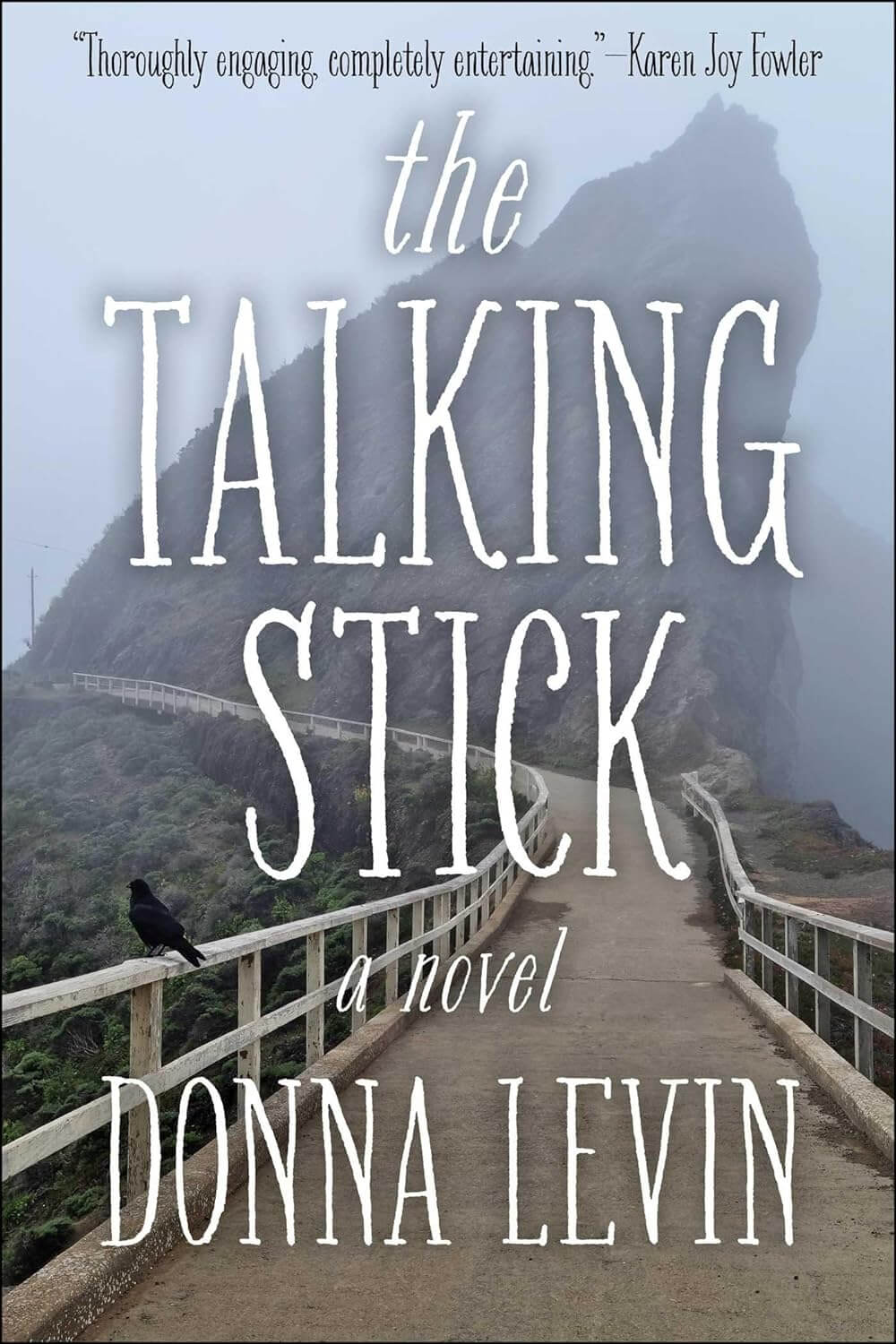
Citywide Bytes—In her new book, Donna Levin explores a romanticized past
In author Donna Levin’s new book, “The Talking Stick,” we meet Hunter, who has lost…..well, just about everything. Her husband has left her for her former friend, now best enemy Angelica. She has no job, no prospects, and is unsure of what comes next.
That “next” happens while exploring a San Francisco flea market. Here, she’s sent on a journey with three other women who join her journey to reexamine pasts, explore grief, addictions, parenting, and marriages, and discover that some of their most-cherished memories are romanticized versions of the truth.
In this interview, we look at what inspired this book and introduced to Hunter and Angelica. Donna talks about the element of a Talking Stick and why it was included in the book. She shares a look at the journey Hunter’s on and the people she’ll be sharing it with and just where it’s all going.
That “next” happens while exploring a San Francisco flea market. Here, she’s sent on a journey with three other women who join her journey to reexamine pasts, explore grief, addictions, parenting, and marriages, and discover that some of their most-cherished memories are romanticized versions of the truth.
In this interview, we look at what inspired this book and introduced to Hunter and Angelica. Donna talks about the element of a Talking Stick and why it was included in the book. She shares a look at the journey Hunter’s on and the people she’ll be sharing it with and just where it’s all going.
Subscribe to:
Posts (Atom)