Showing posts with label fiction. Show all posts

Wednesday, December 17, 2025

Five by Five—Telling the overlooked stories in debut historical fiction novel

By Max Bowen

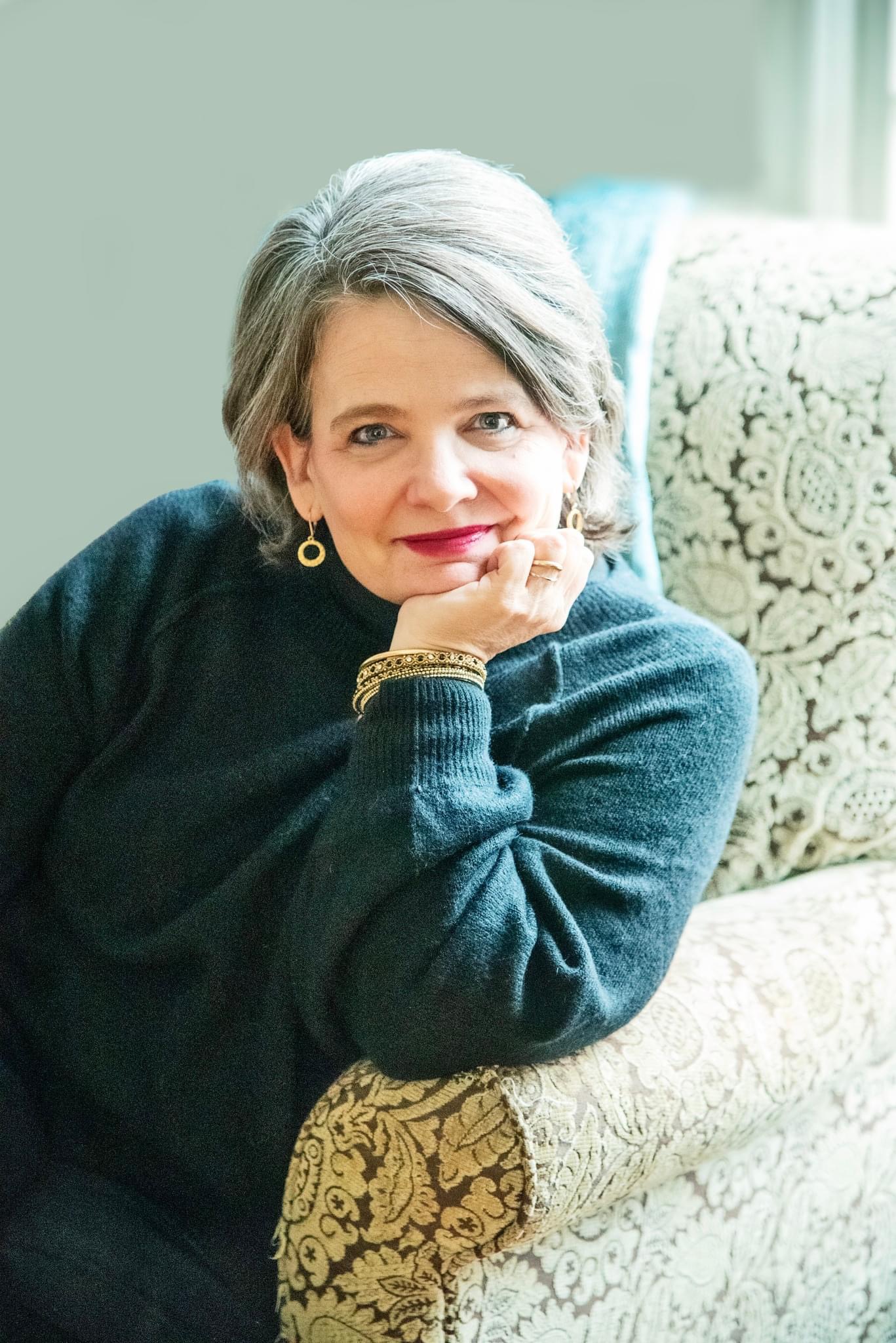
One woman is willing to risk it all for the sake of all young women in Nancy Bernhard’s debut historical fiction novel set during the infamous reign of the Tammany Hall crime syndicate. The Double Standard Sporting House (Jan 20, 2026, She Writes Press) follows Nell “Doc” Hastings, a brothel owner who also runs a small free clinic for women. When a young woman enters her clinic bleeding and bruised, Nell discovers a sex ring selling virgin girls to the most prominent men in the city–and risks her entire business to bring them to justice.

In this interview, Nancy talks about what inspired the book and her interest in the story behind it. She shares the family story that led to her interest in what is referred to as a “fallen woman” and the truth behind it. Nancy also talks about the parallels between the setting of the book and today.

Given that this is your debut novel, I’d like to ask what got you into writing?
I trained as an historian and have written for decades, but I was always frustrated by the narrow conventions of academic writing. Plus, women’s stories are often hidden from recorded history, or seen through sexist lenses. I moved into historical fiction so I could tell the overlooked stories, to imagine how women would have told their own lives, and to shift those patriarchal lenses.

How did you come to know this topic and how did it become the setting for your book?
My very flamboyant grandmother once told me that her Aunt Beatrice was a madam. I wondered how a middle-class girl from a large, supportive family would have ended up in the sex trade. It turns out it wasn’t true. Beadie lived with a married man, and anyone living outside the boundaries of sexual convention was deemed a “fallen” woman. But I got interested in the question, and the answer turned out to be epidemic rape and seduction. I began to imagine a smart and capable girl who suffers an assault, and makes the most of her life on the far side of respectability. She finds greater power and independence in the demimonde than she would ever have been allowed in mainstream society.

What kind of research did you do and did it wind up changing the book?
I read about 100 books on the history of the sex trade, the Tammany Hall political machine and 19th century reproductive medicine. I decided to set the book in 1868 based on one half-sentence in Marilyn Wood Hill’s book “Their Sisters’ Keepers: Prostitution in New York City, 1830-1870,” which said that in the 1870s, the Tammany Hall political machine gained control of the trade, “thus ending a brief but unique era when prostitution was managed predominantly by females.” I tried to find out more about that takeover but never found very much. So I imagined how the syndicate would have brutalized these women, and how they might have fought back.

Did you find any parallels between the events of the book and today?
A breathtakingly corrupt political machine that traffics young girls? That’s timely, and in fact a perennial tragedy. Women coming together to tell their stories and to heal in community certainly has more traction now than in 1868, but I believe they have helped one another heal in similar ways throughout history, even if we have no records of it.

How did you wind up working with She Writes Press and how would you describe the experience?
The gatekeepers of traditional publishing treat aspiring authors like dirt, and I finally decided to stop begging. One day I did a web search for something like “feminist critique of publishing industry” and the first five hits were for She Writes publisher Brooke Warner. The press is very professional, and the community of authors is invaluable. We trade information and support, which you won’t find at a Big Five publisher. Not everyone can afford a hybrid, but I’m very grateful for the respect and control She Writes gives its authors.

Friday, September 5, 2025

Five by Five: Writer says ‘not again’ in new book

By Max Bowen

Anna argues with her mom about a school science award. Ben discovers in his seventh decade that he is Jewish. Chester searches for his little sister in a snowstorm. Dixie is pregnant with her second child.

Inspired by the ongoing wave of school shootings in this country, “Shot” by Jude Berman collects 26 fictional short stories of gun violence, each featuring a different person from a different place in the U.S.

In this Five by Five article, Jude talks about the different characters in the collection, how the stories came to her, and the message for the readers.

What inspired this book?
“Shot” was inspired by yet another school shooting. I saw it on the news. I read about it. I wept about it. I was angry about it. Like everyone else, I said “not again.” I also wondered how it is that we don’t know better, that we can’t figure out how to stop this from happening. “Thoughts and prayers” clearly don’t make a difference. So I was inspired to use the power of storytelling as one small way to make a difference.

How did you go about creating the different challenges that each character faces?
“Shot” is a collection of 26 fictional short stories; any resemblance to real-life people is a coincidence. Yet I don’t feel like I created these characters. Rather, they came to me. When I was taking a walk, or just at some random moment during the day, I would feel them sitting on my shoulder, whispering, “Tell my story.” Each story is unique. The specific challenges each one faces are unique as well. So all I did was listen, and then I told the stories.

Is there something that ties these stories together?
All of the stories are tied together by the theme of gun violence. In one way or another, each character faces an incident of gun violence. For most, it comes at a completely unexpected moment. That moment is different in each story, yet the stories are united by the universality of the experience.

Why the decision to organize this in the ABC format?
The first character who came to me told me her name was Anna. The next one was Ben. Then it occurred to me there were stories for every letter of the alphabet, and that that was a good way to illustrate the diversity of people who encounter gun violence. However, it’s not the only way. The 26 characters are all from different US states. They range in age from four to eighty and are diverse with respect to gender, ethnicity, race, sexual orientation, profession, and more.

What do you hope readers take from these stories?
Very simple: death by gun violence can happen to anyone. It can happen to your loved ones. It can happen to you. At any moment. Most likely, you won’t see it coming. So, understanding that, what do you want to do about it?

Friday, March 7, 2025

Five by Five: New book explores 1970s sexual freedom, feminism

By Max Bowen

Award-winning author Jessica Levine’s new book “Three Cousins,” follows three young women on the cusp of adulthood as they explore their sexual freedom and adapt to 1970s new ideas of feminism. 

In this Five by Five article, Jessica talks about her three protagonists and their different personalities, the era of the 70s and its influence on the story, and the modern elements in prorated into the story.


How did your own life help shape the story?
In “Three Cousins,” three young women come of age while in school at Yale. While I never attended Yale, my best friend did, and later on my husband taught there, which is to say that I got to know Yale by proxy. As for the three protagonists, they were inspired by both my family and the friends I had in college. They are also personality types who embrace the new opportunities presented by second wave feminism in different, archetypal ways. Lastly, they are reflections of different aspects of my own character and experience. I describe Julia, the most conventional of the three cousins, as “being too in love to have feminist preoccupations.” Her romantic, choosy nature reflects the cautious, virginal teenager I was growing up in a sheltered environment. Robin, on the other hand, is reading feminist texts and exploring her bisexuality. I became Robin attending a women’s college and having relationships with both sexes. Finally, Anna wishes to travel solo and explore the world. Anna’s journey is based on the adventures I had after graduation when I lived abroad, teaching English first in Paris, then in Rome.

Your book explores themes such as sexual freedom and second-wave feminism. How are these woven into the story?
Because I attended a women’s college (Wellesley) and had a couple of lesbian relationships at the time, I was steeped in the women’s movement of the 1970s, and “Three Cousins” reflects not only my personal experiences, but also the rich feminist literature, both fiction and non-fiction, that came out of that period. For example, chapter two of my novel mentions Adrienne Rich’s “Of Woman Born: Motherhood as Experience and Institution.” Rich argues that motherhood is not “natural” but shaped by the (patriarchal) social and historical structures in which it takes place. Her book had a huge impact. Coming of age in the 1970s, we very much wanted to be different from our mothers, and that process began with understanding the obstacles and limitations our mothers had faced so that we could move beyond them. And one thing we definitely wanted was more sexual choice and more professional freedom than they’d had. My novel stages these themes through a depiction of the conflicts surrounding sexual partners, relationships with mothers and career paths.

I read that the book came out of “the disappointments of modern-day feminism.” What are these?
Those of us who believe in gender equality, LGBTQ+ rights, access to contraception and abortion, and support for working mothers, those of us who still hope to see the passage of the ERA and the end of homophobia and violence against women, we are all utterly dismayed at the current direction of public policy in the United States. A therapy client of mine, survivor of sexual abuse, said to me after the election, “Great. We’re going to have a government run by rapists.” The sense of needless cruelty and going backwards in history is palpable. And all these issues affect women and the LGBTQ+ community where it hits home: in their bodies, their romantic partnerships, their family lives, and their ability to earn a living. Never more than now has the personal been political.

The book is set in the 1970s. Why this time period and how does that factor into the story?
In my previous novels, “The Geometry of Love” and “Nothing Forgotten,” I fleshed out the stories of Julia and Anna in the decades after college. After my last novel, I returned to a long section I’d cut from an earlier version of “Geometry,” consisting of 200 pages about Julia and her cousins in college in the late 1970s. When I stumbled on that unused story many years later, it called to me, perhaps because my daughters had just entered their early 20s and I was processing the difference between my youth and theirs. Or because the period after the end of the Vietnam War now seems like a more hopeful time. Yes, the war and Watergate marked the decade with cynicism and anger, and historians like David Frum have argued that the seeds of the recent conservative takeover were planted then. But everything is relative, and compared to the normalization of misogyny, homophobia, and racism that we are currently witnessing, that time seems to have been a one in which at least we were able to imagine a positive, more inclusive future for our democracy. I was happy to spend time in that decade as I wrote the book.

Given recent events, such as the overturning of Roe V Wade, do you feel this book is timely?
I do think it’s timely. I hope this novel can remind young women today of the fighting spirit their mothers and grandmothers had. If we give in or give up, then there truly is no way forward. Feminist mothers need to hand the torch on to their daughters and remind them that we have agency so long as we protest, remembering the gains and victories of more hopeful times.


Monday, February 10, 2025

Five by Five: Robert Steven Goldstein explores hidden lives in new book

By Max Bowen 

Author and past guest Robert Steven Goldstein tackles the theme of what we hide in his new book, “Golda’s Hutch.” In the book, were introduced to Craig Schumacher and his wife Shoshana and the secret life they would do anything to keep hidden.

In this interview, Robert talks about the creation of Schumacher and how he incorporates a bit of himself into his characters. He shares how psychologist Carl Jung’s concept of the “shadow” and how this shaped the story.


I like the theme of ‘what we hide from the world versus what we reveal.’ How do you explore it in your book?
“Golda’s Hutch” is an emphatically psychological novel. How the characters interact with each other vs. what they agonize over in their own private thoughts is how the book splits its time. Although Craig Schumacher is ostensibly the protagonist, there’s really an ensemble cast of seven characters at play (three couples and a single woman) all of whom are professionally accomplished but also flawed, and in various ways dysfunctional. Readers will come to know each of these people well. They’ll also come to know an intriguing rabbit named Golda, who practices yoga with Craig, and joins him in his spiritual journey.

How did you create the character of Craig Schumacher?
There are bits of me in Craig, as well as bits of other people I came to know during my 35-year corporate career. When I first started out, in 1974, as a mail-boy earning $500 a month (yes, a month!) I naively believed that as I moved up the corporate ladder, at each new rung I’d encounter people with greater intelligence and more integrity. I was sorely mistaken.

With each promotion I mostly met people who were more scheming, cunning and Machiavellian. But there were exceptions—and the leaders I encountered who modeled values of honesty, integrity, and compassion were not just better people to be around—they also tended to build the most hardworking, loyal. and successful teams. And most of these leaders had a solid spiritual core—and for a select few of them, that spiritual core was shaped more by experiential Eastern mysticism than by faith-based Western traditions. Craig Schumacher is one of these fascinating folks.

Can we get some insight into the secret he’s hiding?
Here’s where the novel gets controversial, and where some readers will really latch on, whereas a few others may shy away. Craig and his wife Shoshana are members of the San Francisco Bay Area’s clandestine BDSM community. Shoshana, in fact, makes her living as a professional dominatrix, although both she and Craig go to great lengths to hide all this from Craig’s work associates.

There have certainly been novels that explore BDSM—some have even been bestsellers—but those novels tended to eroticize BDSM and employ it as a vehicle for titillation. “Golda’s Hutch” is very different. “Golda’s Hutch” gets deep inside the minds of people who are otherwise ordinary, but whose innate sexual orientation demands power exchange and dominant/submissive play. The novel reveals the furtive machinations these people are forced to engage in to keep their propensities secret. And it questions why, despite societal acceptance of many other sexual orientations, this one remains taboo.

Byron Dorn sounds like Craig’s opposite, but how do the two interact?
Byron, an ambitious, and bitterly envious man, reports to Craig in the corporate hierarchy. Quite by chance, he stumbles upon the secret Craig and Shoshana have worked so hard to keep hidden. After his initial discovery, Byron proceeds to uncover still more evidence through purposeful and meticulous spying. Byron and his wife Adelle ostensibly remain friends with Shoshana and Craig, even as they secretly plot to use the potentially damaging information for self-gain.

When I develop characters for a story, I always like to put a little bit of myself into each one, whether that character is male or female, likeable or unlikeable, old or young. When creating Byron Dorn, I was reminded of the famous psychologist Carl Jung, and his concept of the “shadow”—the part of us we’re not particularly fond of, and which we keep hidden away in the deep subconscious recesses of our psyche. The aspects of me that went into Byron were mined from my shadow.

Reading about your past works, you really span different ideas and genres. How do you develop your stories?
I start with characters. I try to recall people I’ve known, combine the interesting traits of two or three of them, toss in a sliver of myself and a huge chunk of imagination, and after a bit of cerebral kneading and manipulating, I have a character. That character often suggests to me what sorts of other characters would make for intriguing compatriots. And a week or so later, when what feels like the right number of characters have materialized, they as a group pretty much take over—they make it quite clear where the novel needs to be set—and then the plot starts oozing slowly from their collective fictional pores.

This process doesn’t lend itself to producing works of a consistent and predictable genre or brand. Some of my novels are light and humorous—some are probing and philosophical—whereas my latest, “Golda’s Hutch,” is a bit of both while also being gritty, and suspenseful. And that, I guess, is a reflection of me as a person. Sometimes I’m serious, sometimes I’m silly, and all sorts of places in between. My novels reflect this sort of variety. And as a novelist, it’s really the only way I feel comfortable working.

Tuesday, October 22, 2024

Five by Five: “Sleeping in the Sun” offers a blend of perspectives on a tale set in India

By Max Bowen


In Joanne Howard’s family-inspired book, “Sleeping in the Sun,” (Oct. 22, She Writes Press) readers are introduced to Gene Hinton and his Indian servant, Arthur, in British-ruled India. The book takes on two very different perspectives—one of privilege and one without. In this Five by Five interview, Howard shares the family stories that helped create the book, introduces us to George and Arthur, and talks about the historical changes she made in writing the book.

How did your family’s missionary work inspire the story?
This novel started one Thanksgiving dinner where my family passed around photo albums and diaries. I had always known that my grandfather was born and raised in India, and he would often cook these elaborate Indian dinners and even made me toys with Bengali inscriptions painted on them. But that Thanksgiving was the first time I can remember delving into the family archives and seeing photographs of the life they had there. It just struck me as such a different life than my own; there were diary entries of eating dinner outside a fragrant blooming Kamini tree in the moonlight or shaking out the bedding every night to make sure no critters had climbed in. And when I realized I had never come across a novel about Americans in British India, I just thought, there must be a story here.

Their life as missionaries was somewhat unique for westerners in India in that not only did they immerse themselves in India’s lowest social classes, those that needed the help, but they also were quite poor themselves. I thought this was pretty different from all the novels I had read about the English in India, which often had characters of high society or power and lived very proper lives.

What kind of research was done to prepare for writing?
Of course I started with my family’s well-curated trove of firsthand accounts, from multiple family members’ autobiographies to school diaries to vintage photographs. While that helped me imagine this time period and these characters, I was conscious of not wanting to stick too closely to the facts; this was still, after all, my story to tell, so I didn’t want to tie myself down to the historical accuracy. As for Arthur’s character, who is an Indian man and therefore outside my own lived experience or personal connection, I just tried to absorb as many works of Indian literature that matched his background and the time period, and two books especially inspired his character: “The Autobiography of an Unknown Indian” by Nirad C. Chaudhuri and “Pather Panchali” by Bibhutibhushan Bandyopadhyay.

In 2018, I also took a trip to India and visited a few locations that appear in the novel, such as the neighborhood where my family lived, their mission’s church that is still there, and some places in Calcutta like Howrah Station and the Maidan.

This book actually began as my thesis during my MFA in Creative Writing at Pacific University, Oregon, so there was a high expectation for research not only from a historical perspective but also from a literary perspective; I read as many books as I could set during the British Raj.

Tell me about the time period this book takes place in and what is happening?
The book is set in the 1930s, just a decade before India gains independence in 1947. In 1911, the Raj moved its capital from Calcutta to New Delhi amidst a rising nationalist movement in Calcutta. So the story takes place in between these big historical events. Bengal was historically a more progressive part of India; for example, the Bengal Renaissance was an arts and culture movement that saw a rise in themes of individualism and independence. So the stage is set for the fall of colonial rule, even if it is still a few years off.

What historical changes does your book make and why?
The family’s Indian servant, Arthur, is urged by his friend, Neer, to try courting Neer’s cousin and to see if married life is right for Arthur. The concept of courting or dating is very western compared to India, where arranged matches are more common. However, I was inspired by “A Suitable Boy,” a novel that is set just 20 years later about a young Indian woman who dates in search of a husband. And again, Bengal is a very progressive part of India, and with Arthur’s unique personal situation of having no parents or extended family to help arrange a marriage, I wanted to explore what a marriage plot could look like for him. It’s highly unusual, but the plot reveals why this is such a special case.

Who are Gene and Arthur, and how would you describe their relationship?
Gene is the youngest of four rowdy American brothers, and Arthur is the family’s lone Indian servant. They can both relate to each other as being at the bottom of the hierarchy in their lives, albeit in different ways. They are also both outcasts on some level; the Hintons are American and don’t quite fit in with British society, and Arthur has spent almost his whole life serving this missionary family, which typically didn’t mesh well with native Indians. They are also the only two people who are skeptical when Uncle Ellis arrives; they question why this high-ranking British judge is deigning to visit this humble American missionary family.

Thursday, July 11, 2024

Citywide Bytes: NecronomiCon—the home of weird fiction literature

Ken Vaughn

Who here likes weird fiction? Wow, that’s a lot of hands. Ok then, listen up, because NecronomiCon Providence is the place for you!

In this episode of Citywide Bytes, Ken Vaughn, director of core programming for this bi-annual showcase, talks about the panels, guest speakers, special events and much more that await those eager to check out this weird and fun convention. We spotlight the guests of honor and Ken talks about the work to bring them all together.

We also look at how this event has grown over the years from its inception in the 90s to what it has become today. NeconomiCon takes place from August 15-18 in Providence, Rhode Island at the Omni Hotel.


Wednesday, May 22, 2024

Five By Five—“God Bless the Child” spans multiple lives

By Max Bowen 


“Five By Five” is the name for our series of written Q&A interviews with writers and musicians. The name actually refers to audio signals, which ties in with our regular podcast. Five By Five is another way to say “good signal strength” or “loud and clear,” but can also mean “exceptional quality,” which certainly lines up with the artists we speak with. Now with that out of the way, on to the book!

Anne Heinrich’s debut novel “God Bless the Child,” (June 7, 2024, Speaking Volumes) grew from a single story into a three-book series, and in this interview, she speaks

on how it started and diving back into the story years later. She also talks about the alternating viewpoints the story takes as it spans across two women’s lives. We also go into the different topics she goes into that surround motherhood and what we can expect next. 

Here’s a look at the story synopsis:

Mary Kline has always confronted the challenges of her obesity and infertility with unyielding determination, refusing to succumb to societal expectations. But she desires one thing above all; a child of her own. When her vulnerable friend Pearl unexpectedly finds herself pregnant, Mary steps forward as both caregiver to Pearl and guardian to her child, Elizabeth. Mary sees an opportunity in motherhood to heal the wounds of her own loveless past, but Elizabeth resents Mary, finding her repulsive and stifling her upbringing. As the years pass, Elizabeth grapples with unresolved anger and struggles with her mental health, seemingly destined to repeat the same mistakes with the family she makes for herself. Can Elizabeth break free from the pains of her adolescence finding forgiveness for her mothers' shortcomings, in order to become the mother she’s always wanted?

I read that this book was 18 years in the making. How did you develop it over that time?

When I started writing this and collaborating with an editor, our youngest daughter was only 3 years old and too little to get on the school bus for preschool in the next town. I scratched the first draft of “God Bless the Child” on a stack of yellow legal pads three afternoons a week in a little café while she went to her school. I finished the draft and even started pitching to agents, but life as a working mother to three children kept getting in the way. I let the manuscript sit in a drawer for quite a while but did find myself sneaking away when I could to write new stories. It always felt self-indulgent.

My children are grown, and I decided to reach out to my editor to see if he would give my new stuff a read. He agreed and encouraged me to pull the finished novel out of the vault. I did. It needed a little more work, but still had legs. He thought it could be pitched, along with some of the new pieces I’d written, as a three-book series. Things happened quickly after that. We found an agent, and just months later, I had a contract with a traditional publisher. I like to think that the timing was just better this time around. The universe said yes!

Who are the alternating viewpoints?
The story unfolds over three generations, with staggered viewpoints of the primary characters throughout. The plot is not presented in a linear fashion, so the reader must pay attention to who’s doing the talking and what they are revealing. The chapters are shared by the book’s two primary characters, Mary Kline and her surrogate daughter Elizabeth, along with a host of other characters who drive the story forward and backward in their own distinctive voices. Some of the chapters are long, and others quite short.

Other characters who get a fair amount of real estate, or voice, in the book are David, Elizabeth’s husband; Little Mary, Elizabeth’s and David’s young daughter; Johnson Kuhlman, a quirky bystander who become essential to the plot and provides equal shares of solid observation and comic relief; and James Pullman, the pastor’s son, whose unwise dalliances with a vulnerable young Pearl Davis, Mary Kline’s only friend, lead to the a central plot line.

How did you combine them and how does this drive the story?
When I started the manuscript, I just let things spill out onto the page, and put shape to it over time. This is a character-driven story, and the way the narrative builds demonstrates just how deep and wide the shelf life of trauma can be for families. Some of the minor characters were created expressly to answer questions, provide a back story, or just move characters across town. I’ve been able to do a fair amount of what I would call “taking care of business” that a book just must have with dialogue and memory sequences, too. It is just as interesting to consider the characters who are essential to the plot but have no voice at all.

What are some of the topics you take on in this book and how are they presented?
A theme throughout the book is a complicated set of questions around the definition, nature and nuances that define motherhood. None of the characters in God Bless the Child have particularly good mothers and they are flawed as mothers themselves. There is an abortion and some intimate scenes that are visceral, but not gratuitous or loaded with judgement. In fact, these pivotal moments in the story are tucked in tight right next to other harsh, sad realities that exist when children are placed in the care of adults who are ill-equipped to nurture and love in ways that are natural or socially acceptable.

There is a fair amount of emphasis on parents (both biological and adoptive) who are driven by their own needs and desires rather than what is best for the children in their care. The book delves into mental health issues, abuse and even challenges the sanctity of places and people who should be safe harbors for the vulnerable — but often are not. All the characters grapple with the choices they have made, as well as those that have been thrust upon them by others. I think the story has the potential to lead to rich and necessary conversations about love, loss and forgiveness at a time when we’re craving connection more than ever.

This is your debut book. Are others planned?
Yes. “God Bless the Child” is the first in a three-book series to be published by Speaking Volumes. The series is called “The Women of Paradise County.” Book Two, “Violet Is Blue,” will release in June 2025, to be followed by Book Three, “House of Teeth.” I have a healthy start on another stand-alone novel, “A Room for Candace,” but will not be diving back into that one for a while.


Monday, March 25, 2024

New tech novel looks at the real impacts of AI

By Max Bowen

In her new book, “The Deepfake” (Out on April 2 through She Writes Press) Author Joan Cohen takes a look at the possible consequences of artificial intelligence (AI), not in some distant future, but here and now.

In the book, Sylvie, who works for an AI company, uncovers her colleagues’ illegal activities. Torn about what to do, she confides in her personal trainer, who’s dismayed not only by the choices she faces but also by her advocacy of AI, a technology he considers dangerous.

In this book, Joan talks about what inspired the book, gives insight to her main character, and shares her take on this technology.


What inspired you to write a book centered on AI?
So many people don’t understand what AI is or don’t believe they need to worry about it yet. They associate the risks with the distant future when robots might take over. AI is already in our lives. When a fictional character uses a GPS or talks to Siri, that person is using AI. So, the question is, why isn’t AI part of every novel and not just speculative fiction or nonfiction? “The Deepfake” is a story about its characters, but for them, AI moves from a topic of debate to an influence on outcomes.

Who is Sylvie and what is her stance on the technology?
Sylvie is a young woman working in sales for a software company that sells businesses AI-powered solutions. To Sylvie, AI is a wonderfully promising technology. As the story unwinds, she finds herself defending AI to a man she falls in love with. He takes the opposite view and sees AI as dangerous. Events unfold that give both of them reason to reconsider their views.

What is the big secret Sylvie discovers and what’s the risk that it poses?
There is more than one secret in “The Deepfake.” I don’t want to provide spoilers to potential readers, but Sylvie learns AI can be a tool that alters our perception of reality in both our personal and professional lives.

Does the book take a page from recent AI-related news?
Recent AI-related news has been both enlightening and a thorn in my side. The technology and the news about it changed so fast, I had to keep going back in my manuscript as I was writing it to change aspects of the story that were obsolete.

What would you say are the pros and cons of AI becoming more prevalent in our lives?
This question invites a PhD-sized thesis for an answer. I can best respond with an example. There has been plenty of publicity around the failures of self-driving cars. I keep wondering how the AI software in those cars decides the correct course of action in a potential accident. Is it better to let the driver die to save pedestrians who are children? That would be for the greater good, but would I buy such a car?

What values inform AI’s choices: an eye for an eye? Turn the other cheek? Die for a cause, or live to fight another day? We all have different values (and religions), but what are the values of the software engineer who develops the AI software intended for a specific application? What will the software decide after it has digested all our religious and philosophical literature? It teaches itself. AI will bring fabulous advances into our lives but not without terrible risks.


Monday, June 20, 2022

Robert Steven Goldstein takes on a new perspective with “Will’s Surreal Period”

After reading just a couple chapters of Robert Goldstein's fourth novel, “Will's Surreal Period,” I have to say I was completely hooked, so it was a blast to speak with the writer on the various ins and outs of the characters, theme, and setting. Here's a quick look at the synopsis:

When William Wozniak, a San Francisco artist who has struggled for years in obscurity, suddenly and inexplicably finds himself painting in a startlingly new surreal style, he is embraced by the art world.

But health issues lead him to a neurologist, where Will discovers that his new artistic style is the result of a life-threatening brain tumor. He must decide whether to have surgery to remove it—relegating him to painting once again in the drab style that defined his years of anonymity—or allow the tumor to grow and most likely kill him.

To make matters worse, William and his wife Rosemary are struggling financially, having been disowned by William’s father Arthur, a cantankerous and homophobic old widower. Arthur is cared for by his younger son, Bertram, in a big house in Scarsdale, New York. But when Bertram, a gay man in the closet due to his fear of being disinherited, finally comes out, Arthur decides to switch allegiance to Will and move to California.

A mess ensues.

And it remains to be seen whether Laurel, a portly, progressively minded California real estate agent who’s taken an improbable liking to Arthur, will make the situation better—or worse.


Robert and I look into the choice that his main character has to make and how this blends with the other storyline of the dysfunctional family. We talk about his choice to retire in his 50s and pursue writing and how it's defined him as a person. Robert shares the stories of his first three novels, how they're all tied together and at the same time, stand alone.


Thursday, February 24, 2022

Ariane Torres blends feminism, domestic space, and women’s invisibility in debut novel

Mark those calendars for March 1st, because Somerville-based author Ariane Torres has some big news to share! Her debut book, “We Are The Kings,” is set to release through Bold Story Press.

The story centers around Marcella as she grieves the death of her grandmother, unearths family secrets, and refuses to settle for a predictable life or a boring man. While Marcella is sifting through her family’s conflicting and fading memories, she puts into words what no one else will say out loud, revealing not only what may or may not have happened, but what is truly at stake when a woman tells her story.

In this interview Ariane and I talk about Marcella, her role in the story and the personal traits that she shares with people in the author's life. We look at the different themes and how they're explored in the book as well as why Ariane wanted to include them.

Ariane's background includes majoring in Russian Studies and English Literature and graduate work in prison architecture and aging in prison. These played a role in the book and its writing and we talk about how it happened.


Monday, May 10, 2021

Author Ames Sheldon blends family history with fiction in her new novel

In her new book, ““Lemons in the Garden of Love” (available May 11 from She Writes Press) Ames Sheldon looks at her ancestor who helped found the Birth Control League of Massachusetts, now known as Planned Parenthood. She talks about what it was like to explore her family history and how she adjusted it for her characters, Cassie Lyman and Kate Easton.


Ames and I talk about women in literature and how her characters fit into this world, as well as how they stand apart. Ames looks at her past works and the new directions she goes in.


Saturday, October 17, 2020

Author Heather Mateus Sappenield takes us on 17 journeys in "Lyrics for Rock Stars"


Ranchers, super models, dead pigs, burro racers, and religious beet farmers—these are just a few of the characters in Heather Mateus Sappenfield's new book, "Lyrics for Rock Stars." We talk about the different viewpoints in this book, all set in the West, as well as her previous works and how she evolved as a writer.


I also ask her about a line from her bio where she is “fascinated by the many selves each of us becomes in our varied roles throughout the day (some we like, some we do not)” and how that factors in to her writing.