Showing posts with label women. Show all posts

Thursday, May 21, 2026

Five by Five—Building community, one story at a time

By Max Bowen

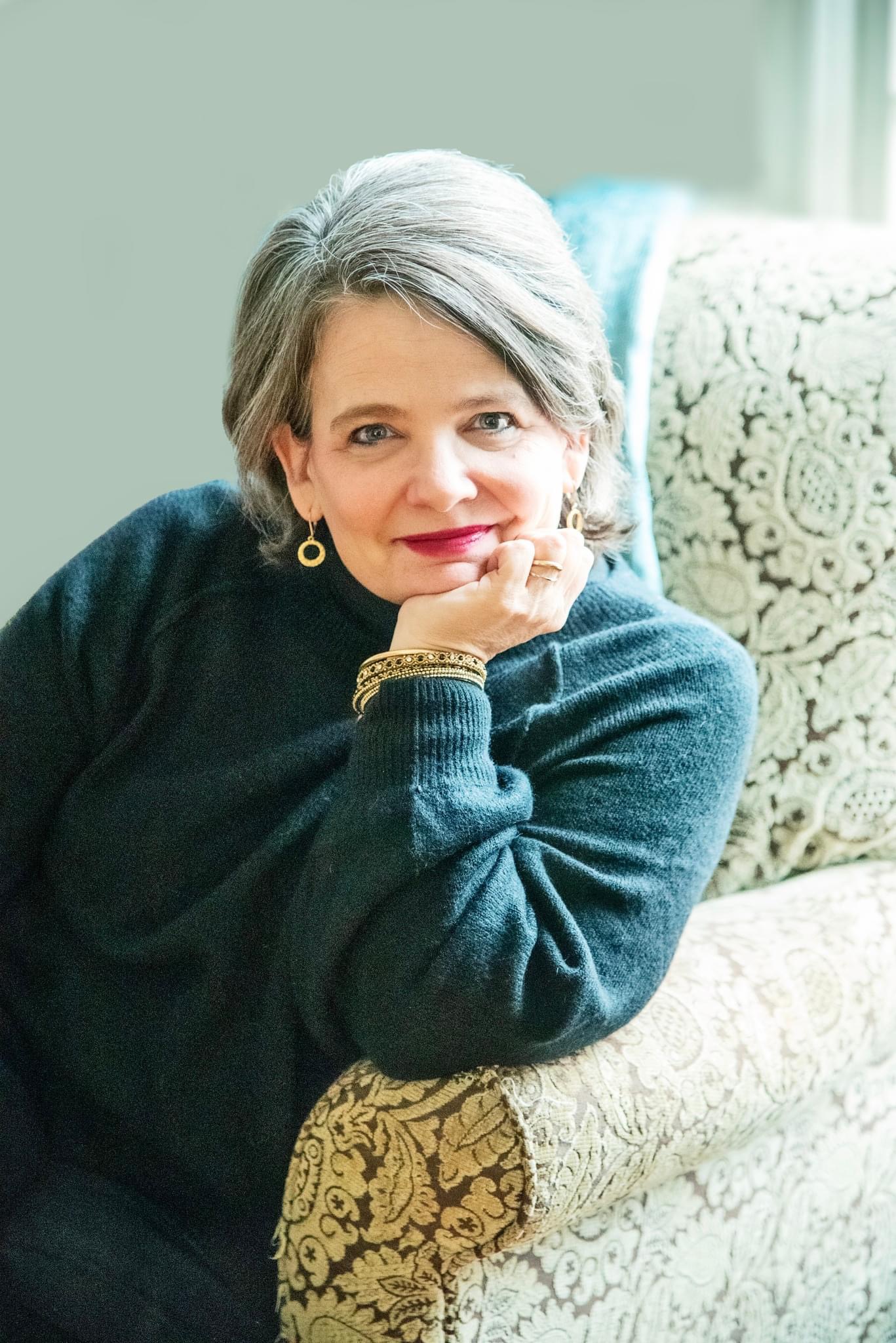
In Anne Shaw Heinrich’s new book, “House of Teeth,” she captures another facet of small-town life in the Women of Paradise County series. 

“Jules Marks and his five little sisters can finally relax. Their feckless parents from Shakey's Half are doing time in the Paradise County Jail, and their Uncle Larry, Aunt Sally and Aunt Clarice have swooped in to give them the safety and security they deserved all along. As they settle into the closest thing to normal they’ve ever known, their neighbors and classmates are quick to remind them not to get too comfortable. Poulson’s only dentist makes a generous offer to help the Marks children fix their long-neglected teeth, but many folks object to the free treatment they receive. Meanwhile, Jules is figuring out how to be a man as he holds onto an ugly secret involving his dear friend, Violet Sellers. When cancer strikes the family, Jules decides to right a wrong that’s gone unchallenged for far too long.”

Anne goes into how her writing process has changed over the course of the series and her process for capturing small-town life. We talk about her protagonist and their creation process, as well as the future of the series.

Check out more at https://www.anneshawheinrich.com.

I want to begin with how your books capture small-town life. What’s your process, and has it changed or evolved over the course of your series?
My process has evolved, primarily because when I wrote the first book, “God Bless the Child,” it wasn’t created with a series in mind. That came later, so I’ve had to throw open the doors and windows on that original story to let the timelines breathe and allow other characters and places to bloom. It’s been an unexpected gift that has turned into something I could never have imagined when it started! When you think about how connected we are to others in the world by time and space and circumstance, the possibilities are endless for exploring and just shining light on voices that beg to be heard.

Who is Jules Marks and what went into his creation?
Jules doesn’t emerge in The Women of Paradise County Series until Book Two, “Violet is Blue.” He’s a little boy born into very tough circumstances just trying to come to terms with his place in the world. We get to see him discover that he actually has some agency. He can set things into motion and I’ve just loved helping Jules grow into a young man capable of loving deeply and being loved in turn. He’s based on a compilation of people I’ve watched from afar and up close. I care about him deeply.

It seems like you're creating the whole community, one book at a time. Where do you see this going?
It’s been a privilege to go deep and wide like I have. Each book adds new layers that could go on and on, if you keep honoring a shared humanity that is just there for the taking if our eyes and ears and hearts are open. Book Three, “House of Teeth,” has been just a joy to write. I’m thankful that the series has been extended to include a fourth book. I’m trying to give the story a respectable closure, so I can move onto another exciting stand-alone book. Who knows what will happen? I’m staying open to any and all possibilities.

Small towns are known for being close-knit. What are the ups and downs of this?
I would liken small-town living to an extended family of sorts. It’s a collection of people who occupy the same general space and therefore find themselves agreeing to a complex set of rules and unspoken expectations that generally suit the common good until challenged by something we just can’t dismiss—the human spirit. It’s inspiring and inconvenient, depending on where you happen to be perched within the ecosystem. Still, there's love, hate, and even an indifference that connects to a twice-removed kind of comfort we crave. I’ll never tire of exploring it.

What’s your advice for someone looking to launch a series of their own?
Keep an open mind and heart. Let readers make up their own minds about the characters and their choices. As their creator, you get to decide where to shine the most light, but the storyline still has to make sense. Let yourself play with time and perspectives, and be really intentional about reminding readers of what’s happened. Remember that they are not as entrenched in the story, so you have to keep them supplied with breadcrumbs.


Wednesday, December 17, 2025

Five by Five—Telling the overlooked stories in debut historical fiction novel

By Max Bowen

One woman is willing to risk it all for the sake of all young women in Nancy Bernhard’s debut historical fiction novel set during the infamous reign of the Tammany Hall crime syndicate. The Double Standard Sporting House (Jan 20, 2026, She Writes Press) follows Nell “Doc” Hastings, a brothel owner who also runs a small free clinic for women. When a young woman enters her clinic bleeding and bruised, Nell discovers a sex ring selling virgin girls to the most prominent men in the city–and risks her entire business to bring them to justice.

In this interview, Nancy talks about what inspired the book and her interest in the story behind it. She shares the family story that led to her interest in what is referred to as a “fallen woman” and the truth behind it. Nancy also talks about the parallels between the setting of the book and today.

Given that this is your debut novel, I’d like to ask what got you into writing?
I trained as an historian and have written for decades, but I was always frustrated by the narrow conventions of academic writing. Plus, women’s stories are often hidden from recorded history, or seen through sexist lenses. I moved into historical fiction so I could tell the overlooked stories, to imagine how women would have told their own lives, and to shift those patriarchal lenses.

How did you come to know this topic and how did it become the setting for your book?
My very flamboyant grandmother once told me that her Aunt Beatrice was a madam. I wondered how a middle-class girl from a large, supportive family would have ended up in the sex trade. It turns out it wasn’t true. Beadie lived with a married man, and anyone living outside the boundaries of sexual convention was deemed a “fallen” woman. But I got interested in the question, and the answer turned out to be epidemic rape and seduction. I began to imagine a smart and capable girl who suffers an assault, and makes the most of her life on the far side of respectability. She finds greater power and independence in the demimonde than she would ever have been allowed in mainstream society.

What kind of research did you do and did it wind up changing the book?
I read about 100 books on the history of the sex trade, the Tammany Hall political machine and 19th century reproductive medicine. I decided to set the book in 1868 based on one half-sentence in Marilyn Wood Hill’s book “Their Sisters’ Keepers: Prostitution in New York City, 1830-1870,” which said that in the 1870s, the Tammany Hall political machine gained control of the trade, “thus ending a brief but unique era when prostitution was managed predominantly by females.” I tried to find out more about that takeover but never found very much. So I imagined how the syndicate would have brutalized these women, and how they might have fought back.

Did you find any parallels between the events of the book and today?
A breathtakingly corrupt political machine that traffics young girls? That’s timely, and in fact a perennial tragedy. Women coming together to tell their stories and to heal in community certainly has more traction now than in 1868, but I believe they have helped one another heal in similar ways throughout history, even if we have no records of it.

How did you wind up working with She Writes Press and how would you describe the experience?
The gatekeepers of traditional publishing treat aspiring authors like dirt, and I finally decided to stop begging. One day I did a web search for something like “feminist critique of publishing industry” and the first five hits were for She Writes publisher Brooke Warner. The press is very professional, and the community of authors is invaluable. We trade information and support, which you won’t find at a Big Five publisher. Not everyone can afford a hybrid, but I’m very grateful for the respect and control She Writes gives its authors.

Wednesday, May 22, 2024

Five By Five—“God Bless the Child” spans multiple lives

By Max Bowen 


“Five By Five” is the name for our series of written Q&A interviews with writers and musicians. The name actually refers to audio signals, which ties in with our regular podcast. Five By Five is another way to say “good signal strength” or “loud and clear,” but can also mean “exceptional quality,” which certainly lines up with the artists we speak with. Now with that out of the way, on to the book!

Anne Heinrich’s debut novel “God Bless the Child,” (June 7, 2024, Speaking Volumes) grew from a single story into a three-book series, and in this interview, she speaks

on how it started and diving back into the story years later. She also talks about the alternating viewpoints the story takes as it spans across two women’s lives. We also go into the different topics she goes into that surround motherhood and what we can expect next. 

Here’s a look at the story synopsis:

Mary Kline has always confronted the challenges of her obesity and infertility with unyielding determination, refusing to succumb to societal expectations. But she desires one thing above all; a child of her own. When her vulnerable friend Pearl unexpectedly finds herself pregnant, Mary steps forward as both caregiver to Pearl and guardian to her child, Elizabeth. Mary sees an opportunity in motherhood to heal the wounds of her own loveless past, but Elizabeth resents Mary, finding her repulsive and stifling her upbringing. As the years pass, Elizabeth grapples with unresolved anger and struggles with her mental health, seemingly destined to repeat the same mistakes with the family she makes for herself. Can Elizabeth break free from the pains of her adolescence finding forgiveness for her mothers' shortcomings, in order to become the mother she’s always wanted?

I read that this book was 18 years in the making. How did you develop it over that time?

When I started writing this and collaborating with an editor, our youngest daughter was only 3 years old and too little to get on the school bus for preschool in the next town. I scratched the first draft of “God Bless the Child” on a stack of yellow legal pads three afternoons a week in a little café while she went to her school. I finished the draft and even started pitching to agents, but life as a working mother to three children kept getting in the way. I let the manuscript sit in a drawer for quite a while but did find myself sneaking away when I could to write new stories. It always felt self-indulgent.

My children are grown, and I decided to reach out to my editor to see if he would give my new stuff a read. He agreed and encouraged me to pull the finished novel out of the vault. I did. It needed a little more work, but still had legs. He thought it could be pitched, along with some of the new pieces I’d written, as a three-book series. Things happened quickly after that. We found an agent, and just months later, I had a contract with a traditional publisher. I like to think that the timing was just better this time around. The universe said yes!

Who are the alternating viewpoints?
The story unfolds over three generations, with staggered viewpoints of the primary characters throughout. The plot is not presented in a linear fashion, so the reader must pay attention to who’s doing the talking and what they are revealing. The chapters are shared by the book’s two primary characters, Mary Kline and her surrogate daughter Elizabeth, along with a host of other characters who drive the story forward and backward in their own distinctive voices. Some of the chapters are long, and others quite short.

Other characters who get a fair amount of real estate, or voice, in the book are David, Elizabeth’s husband; Little Mary, Elizabeth’s and David’s young daughter; Johnson Kuhlman, a quirky bystander who become essential to the plot and provides equal shares of solid observation and comic relief; and James Pullman, the pastor’s son, whose unwise dalliances with a vulnerable young Pearl Davis, Mary Kline’s only friend, lead to the a central plot line.

How did you combine them and how does this drive the story?
When I started the manuscript, I just let things spill out onto the page, and put shape to it over time. This is a character-driven story, and the way the narrative builds demonstrates just how deep and wide the shelf life of trauma can be for families. Some of the minor characters were created expressly to answer questions, provide a back story, or just move characters across town. I’ve been able to do a fair amount of what I would call “taking care of business” that a book just must have with dialogue and memory sequences, too. It is just as interesting to consider the characters who are essential to the plot but have no voice at all.

What are some of the topics you take on in this book and how are they presented?
A theme throughout the book is a complicated set of questions around the definition, nature and nuances that define motherhood. None of the characters in God Bless the Child have particularly good mothers and they are flawed as mothers themselves. There is an abortion and some intimate scenes that are visceral, but not gratuitous or loaded with judgement. In fact, these pivotal moments in the story are tucked in tight right next to other harsh, sad realities that exist when children are placed in the care of adults who are ill-equipped to nurture and love in ways that are natural or socially acceptable.

There is a fair amount of emphasis on parents (both biological and adoptive) who are driven by their own needs and desires rather than what is best for the children in their care. The book delves into mental health issues, abuse and even challenges the sanctity of places and people who should be safe harbors for the vulnerable — but often are not. All the characters grapple with the choices they have made, as well as those that have been thrust upon them by others. I think the story has the potential to lead to rich and necessary conversations about love, loss and forgiveness at a time when we’re craving connection more than ever.

This is your debut book. Are others planned?
Yes. “God Bless the Child” is the first in a three-book series to be published by Speaking Volumes. The series is called “The Women of Paradise County.” Book Two, “Violet Is Blue,” will release in June 2025, to be followed by Book Three, “House of Teeth.” I have a healthy start on another stand-alone novel, “A Room for Candace,” but will not be diving back into that one for a while.


Sunday, November 19, 2023

“Rain Dodging” blends history, travel, and inspiring women writers

By Max Bowen

In “Rain Dodging,” (She Writes Press) author Susan Goodwin took a historical journey to learn more of Mary of Modena, an inspirational person who founded a court of women writers, something unheard of in the 17th century. Susan talks about how she discovered Mary’s story and how it grew into this new book.


I read that the book is part memoir and part nonfiction. What is the memoir portion?
Think of “Rain Dodging” as a triple helix of royal history, travel, and memoir. Irreverently peppered throughout the book, I twist parallel spicy stories of my own resilient, sometimes messy, feminist path.


What was it about Mary of Modena’s story that inspired you to write a book about her?
14th-century French writer François Rabelais declared women were not fully human beings, not endowed with a soul, and not created in the image of God, who, after all, was male. In 17th-century Christian tradition, women were seen as temptresses who personified original sin and lured men to evil. Something about the resilience of women who wrote and published in an age that did not support them brought forth an emotional reaction. English majors are expected to come up with their own paper topics. When I stumbled onto the late 17th-century Stuart court of Queen Mary of Modena, consort to James II, who at only 14 years of age had been pressured into marriage with a man 25 years her senior and forced to leave her idyllic Italian home, I felt the click, the heartbeat, the stab I feel when I find a topic that intrigues.


I imagine this involved a lot of research. What did you have to do to learn what you needed?
Part of the joy of research—and for me it is joyful—is the ability to explore freely. While attending a summer tutorial at Oxford, I was fortunate to conduct literary research with Dr. Peter McCullough, esteemed professor and Fellow of Renaissance Literature. For six invigorating weeks, I studied Eighteenth-century literature and the arts with the brilliant and delightful Peter. His course energized, making constant connections between history, literature, and artistic movements. While researching my final paper for Peter about poet Anne Finch, Countess of Winchelsea and her poem “Nocturnal Reverie,” I first came upon Mary of Modena, whose court was filled with women writers. A court of women writers would be extraordinary in this time. How did this come to be? How might these women have interacted and inspired one another? What was Mary of Modena’s role in this? I was hooked. Peter was encouraging about my book idea. True to his MO, he dashed to his computer and gathered up a beginning bibliography for me to pursue. This is what got me started on my years-long search for answers.


Mary’s court of women writers—was such a thing unheard of in this time?
This was very unusual and what spoke to me initially.


Was there anything to Mary’s story that surprised you?
How powerless she was to control her own life. As well, the connection between Mary and the women who originated ‘the Salon’ was an unexpected surprise.


What did you learn about the world of early European feminism?
I found a fascinating connection to the history of salon culture. The salon, an important place for the exchange of ideas, developed in 16th-century Italy. Salons encouraged socializing between the sexes and brought nobles and the middle class together. Salons helped facilitate the breaking down of social barriers. Here, women could be powerful influences. Between 1540 and 1560, women writers were numerous enough to be considered a significant group for the first time in Italian literary history. Salon culture flourished in France throughout the 17th and 18th centuries, emigrating from Italy.

One such very important circle—and connected to Mary of Modena—was created on Ischia [Is’ kee ə], an island a mere 17 miles southwest of Naples, Italy. Ischia was a utopia for women receiving dispatches from husbands fighting in war zones while remaining safe from peril themselves. There, in 1509, mistress of Ischia Castle, Constanza d’Avalos, established a poetry salon. She was joined by her niece, poet Vittoria Colonna, a member of the House of Este, Mary of Modena’s noble family. Vittoria launched a “moveable salon” while visiting Duke Ercole II d’Este in Ferrara, just 45 miles from Modena. One such salon was hosted by Isabella d’Este, 1474–1539. Both Isabella and Vittoria were sixth-generation House of Este—Maria Beatrice of Modena was seventh-generation. By the 17th century, in Rome, Princess of Colonna, the daring Marie Mancini—also Mary of Modena’s cousin—was a major salon hostess and a published author of memoir.

Because the women of Ischia lived their adult lives virtually as single, they experienced complete artistic freedom unrestricted by male dominance. Many of the more important Italian salons of the day were led by the women from Ischia or were offshoots of one of their salons. Salon culture spread quickly through Europe. In fact, salon culture could be considered the precursor of modern publishing as a method of moving culture forward.

It is important to me that I pass on knowledge of the early vestiges of European feminism to teach younger generations of women our illustrious histories: Women’s studies go further back than Betty Friedan and Gloria Steinem’s second-wave feminism of the 1960s and 1970s or the suffragettes of the early twentieth century.


Did the writing impact you in any way?
The writing definitely reinforced my love of words, of stringing them together to make poetry. As well, I found a new identity through the historical context of the female struggle.


What do you hope readers take away from this book?
There are different themes in “Rain Dodging” but the one that keeps rising to the forefront at this stage in my life is the inner resilience to keep moving forward, to jump over obstacles. I also genuinely want my women readers to know that not only can one accept aging, but one can gracefully knock it on its ass.