Showing posts with label novel. Show all posts

Monday, September 25, 2023

Michael Eon holds back nothing in “These Things Happen”

In his recently-released book, “These Things Happen,” writer Michael Eon weaves his own battles with substance abuse and a challenging childhood into the story of Daniel Zimmer. I loved this book from the first page and was drawn into the story of Daniel’s early life, which we see transposed with his later years. This book is available through Girl Friday Books.

The characters are really amazing, from Daniel’s brother Max—whose struggles with mental health frame much of his life—to love interests Jill and Brie, to his father. Michael and I talk all about the many people in the book, some of whom came right from Michael’s own life, and the different roles they play. 

Music from bands like The Ramones and Black Sabbath plays a strong part in Daniel’s upbringing, and of course we take the time to nerd out about favorite bands and songs.

Michael also talks about his childhood and his battles with substance abuse. The author shares a lot of details, and we go into who the theme of substance abuse and the message for the readers.

Monday, April 17, 2023

Patrick H. Moore builds on the success of first novel with “27 Days”

By Max Bowen


Like they say, write what you know.

Patrick Moore has taken his career as a private investigator and built a brand-new career as a novelist. His first indie-published book, “Cicero’s Dead,” has led to a new novel, “27 Days.” In this book, we meet PI Nick Crane, caught in a race against time to save his friend and business partner from alt-right power brokers and domestic terrorists who will spare no one to “Make America Safe Again.”

The terrorist group, “The Principles,” is led by Nick’s old enemy Marguerite Ferguson, who is out for his blood. When The Principles kidnap Nick’s friend and business partner Bobby Moore, Nick is informed that he has 27 days to surrender to Marguerite, and if he doesn’t, Bobby will be tortured and murdered. Help appears in the form of a young, idealistic female FBI agent named Carrie North who wants to arrest Marguerite for conspiring to commit domestic terrorist operations against the U.S.. Nick and Carrie join forces and the race against time to rescue Bobby Moore begins.

In this interview, Patrick talks about how one career led to another, Nick Crane’s progression as a character, and the topical aspect of the story.


Let’s begin with your choice to jump into novel writing. What prompted this?
I don’t really remember making a choice to write novels. It’s almost like it was just a given in my psyche, analogous in a way to Descartes’ famous dictum, “I think; therefore, I am,” only in my case it would be “I exist; therefore, I write novels.” The fact my parents read to us a lot when I was a child undoubtedly helped plant the seed.

In 2014 you indie-published your first thriller, “Cicero’s Dead.” How did that experience help with your new book?
“Cicero’s Dead” was my first Nick Crane crime thriller. It did fairly well and sold plenty of electronic downloads. Although many readers really enjoyed Cicero, I felt it had a few flaws, which I tried to correct in “27 Days.” First, I felt Cicero was a bit generic. The antagonist, Arnold Clipper, was a bit of a stock villain. Furthermore, he was offstage through most of the story. The reader only experienced him third hand. So, in “27 Days,” I took pains to make the villains highly visible. Also, I felt the text of Cicero arguably contained gratuitous violence, which I tried to avoid in “27 Days.”

How did your career as a private investigator and sentencing mitigation specialist inform the book?
Through working as an investigator and a sentencing mitigation specialist, I’ve become very familiar with how our legal system actually works, particularly at the federal level. I’ve worked on hundreds of cases, mostly criminal in nature. I’ve seen score of judges, prosecutors, and defense attorneys in action, and I’ve interviewed countless witnesses. I’ve pored over Discovery, sometimes for days at a time. All of this experience has enabled me to write thrillers that are, hopefully, realistic in terms of how our criminal justice system works.

Were there any stereotypes or clichés of thrillers that you wanted to avoid?
I wanted to write a novel with social and political relevance, which is perhaps not typical of most thrillers. I wanted it to be more than pure escapism. On the other hand, I followed many of the standard conventions. I tried to create a page-turner steeped in unpredictability in order to keep readers on the edge of their seats.
Patrick H. Moore

What writers do you feel really get the reality of criminal investigations?
Richard Price and Michael Connelly come to mind. Also Tana French, the brilliant American-Irish writer who has made Dublin her center of operations. And of course, there are many others. I think that Steve Hamilton, Dennis Lehane and James Lee Burke also have a good handle on the “reality of criminal investigations” filtered through their own potent imaginations.

The antagonists of the book want to “Make America Safe Again.” How do current events tie into the book? Was this always the plan?
The “Make America Safe Again” theme reflects the current ethos of the far right here in the United States, which I believe poses a “clear and present danger” to our democracy. The January 6th insurrection is a perfect example of this unfortunate mentality in action. I think the unhinged quality of the antagonists in “27 Days” reflects the “win at all costs” mentality of many present-day right wing elected officials and their enablers in the media. It was always my intention to depict a similar group of miscreants in action in “27 Days.”

In your opinion, what are the challenges of tying in current events without making the book all about your political viewpoints?
This is an excellent question. We’ve all read books where the storyline is simply a thinly-veiled attempt to “make a point” rather than to simply “tell a good story.” The key to avoiding this pitfall, which I was of course aware of, was to create compelling realistic characters (my protagonist Nick Crane and his crew) locked in a life-or-death struggle against their adversaries. The reader is welcome to simply enjoy a lively and suspenseful page-turner without giving much thought to the larger social implications of the story if they so choose.

Nick Crane and Marguerite Ferguson. Who are they and what happened to make them enemies?
My protagonist Nick Crane is a veteran LA private investigator. Although compassionate on the inside, he is one tough and determined SOB, more than willing to “throw down” when necessary. His main antagonist in “27 Days,” Marguerite Ferguson, is one of the principals, a shadowy group of wealthy and influential right-wing aristocrats. Nick has been a thorn in the side of the principals ever since he and his team brought one of their key members, a serial killer of women and “gentler, kinder torture” expert named Frank Constantine, to justice in 2011, eight years before “27 Days” takes place. In the prequel to “27 Days,” which is called “Rogues and Patriots,” and which will hopefully be published next year by my publisher Down & Out Books, the reader will learn that Nick has thwarted all of Marguerite’s previous attempts to destroy him, earning her undying enmity in the process. Marguerite is not used to having her plans foiled and she perceives Nick’s refusal to bow down to her and the principals as a resounding slap in the face.

Are Nick and Carrie North a good team? How do they complement one another?
Nick Crane has always been somewhat skeptical of law enforcement and he is initially highly suspicious of FBI Special Agent Carrie North and her intentions. Nick is used to bending or breaking the rules as he sees fit and reporting to no one. Nonetheless, Nick learns to accept Carrie based on the courage she exhibits, her firm belief that Marguerite Ferguson must be brought to justice for the good of America, and her willingness to help Nick rescue his partner Bobby Moore, who has been kidnapped by Marguerite and her crew. Carrie, on the other hand, gradually gets used to Nick and comes to accept his unconventional approach to “working a case.” As the story progresses, the reader sees that Nick and Carrie are, in fact, indispensable to one another.

I loved the cover! How did it come about?
I’m really glad that you like the cover, something that everyone seems to agree on. We wanted a dark and forboding cover that epitomizes the danger Nick finds himself in. The managing editor of Down & Out Books, Lance Wright, asked his sister Dr. Margo Nauert to design the cover and, to my delight, she did a brilliant job.

Will there be more Nick Crane books?
I certainly hope so. I believe that Down & Out Books will publish the prequel to “27 Days” early next year. It is called “Rogues and Patriots” and it will answer many of the questions readers of the current book have concerning what led up to the predicament Nick finds himself in at the beginning of “27 Days.” “Rogues and Patriots” is almost finished. There will be a third and final book in the “Nick Crane versus Marguerite and the Principals” series with the working title of Giant Steps. After that, I may write more Nick Crane thrillers but they will either be standalones or part of a new series with different antagonists.

Saturday, April 8, 2023

Mark Ellis blends art theft with murder in “Dead In The Water”

 In his fifth book in the Frank Merlin series, Mark Ellis takes us back to WWII to the scene of a grisly murder. But at the same time, priceless pieces of art go mysterioiusly missing. Merlin must uncover the link between the two in this new book, set to be released on April 25 through Hachette.

In this interview, Ellis talks about the setting and how they influenced the books, how his own life proved an inspiration and who Frank Merlin is and how he’s changed over the years.


Why place the book in WW2?

I was born in 1953. World War Two loomed large in my life from an early age. My father was in the Navy during the war and on service in West Africa he contracted a wasting lung disease. It took a while but he eventually died from this. My mother worked for a railway company in South Wales during the war, and made frequent trips up to London when it was being bombed. She told me many fascinating stories about these visits and life in general on the Home Front. It seemed only natural when I decided to start writing historical crime fiction, that World War Two be one option for a period setting. When I then dug deeper into that historical period, I discovered that Britain suffered a huge increase in crime during the war years. This helped make up my mind for me.


What kind of research did you need for this book?

With each book I spend at least three months researching the particular period. In the case of my latest book, “Dead In The Water,” that period was the summer of 1942. For my earlier books I spent a lot of time in libraries, but with the huge advances in the internet, I can now access much of the information I need there. I have also built up my own little World War Two library which is very helpful. History books are a major source of information obviously but I also use biographies, diaries and novels written during the war. Period films can also be useful.


How does the setting influence what happens in the book?

All my books have fictional plots set against specific historical facts which influence the storylines. Much of the plot in “Dead In The Water” revolves around the American military who had been arriving in Britain in their thousands since the beginning of 1942. My first book features murders at the American Embassy, presided over in 1940 by Joseph Kennedy. The London Blitz provides a vivid background to my second book. The background of my third book is espionage among De Gaulle’s Free French in London, and that of my fourth, the wartime British film industry.


Who is Frank Merlin and how did you create the character?

It was always my aim to have a detective hero in a senior position at Scotland Yard, so therefore a man likely to be in early middle age. Originally the hero was a true London Cockney with a wholly English background. However, while on holiday in Spain, I had the idea of making him half-Spanish. He is still to all intents and purposes, a Londoner but has a slightly more exotic background. His back-story is that his father, Javier Merino, was a Spanish seaman, who on a visit to London met and fell in love with Agnes, the daughter of a London ships chandler. Javier settled down with Agnes in London and in due course took over the chandlery from her father. The couple had 3 children, Frank Merlin, originally named Francisco Merino, being the first born.
 
Mark Ellis


How has Merlin changed over the course of the series?

He has remained basically the same though there have been developments in his life which have made him personally happier. I won’t go into detail as that would entail spoilers.


In this book, DCI Merlin discovers a mangled body found just as priceless art goes missing. Without giving away spoilers, how do these two stories intertwine?

Terrible stories of Nazi looting of art from Jewish families in ‘30s and ‘40s Europe still feature in the news to this day. In “Dead In The Water,” one important plot line concerns extremely valuable pieces of looted art which somehow end up in 1942 London. I shall say no more than that various people want to get their hands on it and violence ensues.


Did you have to carefully outline this book?

I do not plan out my books in advance. During my research, I often get plot ideas which I note down. Then I start writing and see where those plot lines take me. Usually, I’m about three quarters of the way through a book before I know who did what.


This is the 5th book in the series. Did you always intend this to become a series, and if not, what happened that it became one?

Yes, I always intended there to be a Frank Merlin series, which is why I set the first one very early in the war. (Merlin 1 is set in January 1940.) As I continued the series, I adopted the habit of setting each book 6 to 9 months after its predecessor. My aim has always been to take Merlin through to the end of the war, so this would imply at least 4 more books if I can manage that.


Where do the ideas for the different stories come from?

Many of my story ideas come from research, as mentioned above. If not they likely come from something I’ve read or seen in the past. The inspiration for my 4th book, “A Death In Mayfair,” came from a book I read a long time ago about the British film industry during the war. This was a surprisingly active production period and there were numerous film studios in and around London during the period. I remembered this when I started researching the book and it gave me the idea of creating a fictional film studio where murder could be done.


There are five books in the Frank Merlin series, and I am working on the 6th. The five books are:

1. The Embassy Murders (previously Princes Gate).

2. In The Shadows of the Blitz (previously Stalin’s Gold).

3. The French Spy (previously Merlin At War).

4. A Death In Mayfair

5. Dead In The Water (4/25 publication date in USA)


Sunday, October 30, 2022

Explore new lands in D.A. Mucci's fantasy sequel

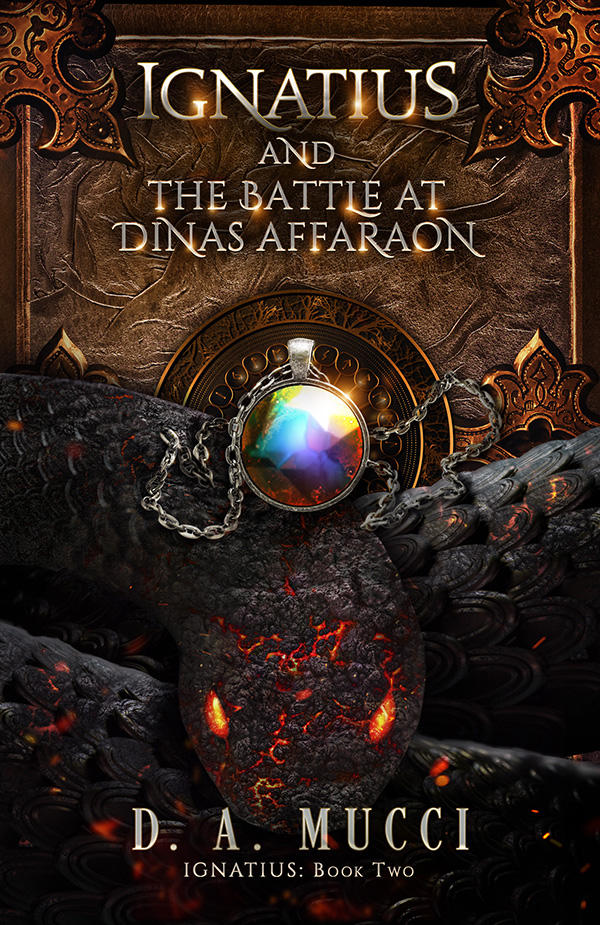
Emergency room physician-turned-writer D.A. Mucci is back with a second book in his fantasy series, “Ignatius and The Battle at Dinas Affaraon.” Have a look at what lies in store:

Fifteen-year-old Iggy is prepared to face his first days of high school . . . but is he ready to face mythical creatures, black magic wizards, and sword fights where people get killed? Iggy’s never thought of himself as a fighter. But as he learns more about the strange place he’s landed, one thing becomes abundantly clear, in the World of Skye they need a hero. And Iggy just might be the one they’re looking for, even if he’s not so sure. In this thrilling continuation, readers will discover new characters, dive deeper into the world and hold on tight as twists and turns abound. This looming battle is epic and could change Iggy’s life.

D.A and I talk about what took him from the emergency room to the bookstore and the various fantasy writers that his children introduced him to. We talk about the challenges he faced as a writer and developing the vast world of his books, which include people, creatures, and even languages. Yes, that's right—he created several languages just for his fantasy series.

D.A.'s books have seen tremendous success, including an interview on Good Morning America and companies approaching him about an animated adaptation of the story. We also look at the epic cover art and the mind behind the greatness.


Thursday, October 20, 2022

Ian Rogers talks Netflix deals and horror collections with “Every House Is Haunted”

Sam. Fucking. Raimi.

I think I can stop there.

No? OK then, onward we go! For this episode I'm continuing my interviews with amazing talent publishing books though Cemetery Dance Publications. Ian Rogers joins me to talk about his soon-to-be-released collection of 22 horror stories, “Every House Is Haunted.”

Perhaps the biggest news is that the book was optioned by Sam Raimi and a feature film of one of the stories, “The House on Ashley Avenue,” is currently in development at Netflix. Script by Jason Pagan and Andrew Deutschman, directed by Corin Hardy, helmer of “The Nun” and “Gangs of London.” We talk all about this, how Ian met Sam Raimi and what the process has been like.

Next, we dive into the book itself, of which the stories include:

  • A mysterious double murder draws the attention of an insurance company with a special interest in the paranormal.
  • A honeymoon cabin with an unspeakable appetite finally meets its match.
  • A suburban home is transformed into the hunting ground for a new breed of spider.
  • A nightmarish jazz club at the crossroads of reality plays host to those who can break a deal with the devil...for a price.

Ian talks about where the ideas came from, which story was the first to be published, and some of his favorites, as well as whether anything was changed from when they were first written.


Monday, October 10, 2022

What's that sound? Explore the haunted house of “Something Stirs”

If you're the type to wonder if that creaking sound is a restless soul, best to skip this episode. For all you horror fans, welcome! Author Thomas Smith joins me to talk about his book, “Something Stirs,” out on Oct. 13 through our friends at Cemetery Dance Publications. Here's a look at what lies within these pages:

Ben Chalmers is a successful novelist. His wife, Rachel, is a fledgling artist with a promising career, and their daughter Stacy is the joy of their life. His novels have made enough money for him to provide a dream home for his family. But there is a force at work in their lives. A dark, chilling, ruthless force that has become part of the very fabric of their new home.

A malevolent entity becomes trapped in the wood and stone of the house and it will do whatever it takes, to find a way to complete its bloody transference to our world.

Local Sheriff Elizabeth Cantrell, and former pastor-turned-cabinetmaker Jim Perry are drawn into the family's life as the entity manipulates the house with devastating results. And it won't stop until it gets what it wants. Even if it costs them their faith, their sanity, and their lives.

This is actually a re-release, since the book was originally published in 2011 through a different company. Thomas and I talk about what readers can expect in this updated version, as well as how he came work with the fine folks at CDP.

We dive deep into the story behind the book and how Thomas created the menacing presence within the Chalmers' home. This is a Christian horror novel, and if that's a new term for you, you're not alone. We look into what that genre is all about and what can—and cannot—be done in this kind of book.


Tuesday, September 27, 2022

Lisa Sherman explores memory and identity in debut thriller

Lisa Sherman
What if you showed up one day and couldn't remember a thing about you, but knew that the life you led wasn't your true one? It's an interesting premise, and the one explored in Lisa Sherman's debut book, “Forget Me.” Here's a look at what's in store:

Who’s that girl? After being fished out of a river in small-town Wisconsin, Wanda Dellas is lucky to be alive – yet, she can’t help but feel like something’s wrong. Wanda is living someone else’s life: that’s the sense she’s had since an accident robbed her of her long-term memory. Barely scraping by, Wanda cleans offices at night in order to support her young daughter. She tells herself that anyone would believe they’re meant for a different existence. Yet she can’t shake the sense that she’s missing something—and that the past she’s been told belongs to her is not the whole story.

Claire Stanbrick’s photo is all over the news. A missing businesswoman who’s presumed dead, Claire bears a striking resemblance to Wanda. After learning that Claire went missing around the same time as her accident, Wanda embarks on a journey to uncover the truth about her past. Yet with each additional clue she uncovers, Wanda faces new dangers that threaten her life . . . or is it Claire’s?


Lisa and I explore how identity and memory tie together, and if one can exist without the other. We look at Wanda's quest to discover the truth about herself and the obstacles in her way. Lisa is a lawyer-turned-author, and shares how her legal background helped with the writing process. This may be Lisa's first book, but it's not her last and we talk about future titles and what lies in store.


Sunday, May 1, 2022

Nick Roberts talks horror styles, character creation, and his new book, “The Exorcist's House”

Horror fans, turn the volume up, because this is one is not to be missed! Author Nick Roberts and I talk about his soon-to-be-released book, “The Exorcist's House,” available through Crystal Lake Publishing.

Here's a look at the synopsis:

In the summer of 1994, psychologist Daniel Hill buys a rustic farmhouse nestled in the rolling hills of West Virginia. Along with his wife, Nora, and their teenage daughter, Alice, the family uproots their lives in Ohio and moves south.

At first, they are seduced by the natural beauty of the farm and enjoy the bonding experience of fixing the old house, but that all changes when they discover a hidden room in the basement with a well, boarded shut and adorned with crucifixes. Local legends about the previous owner’s predilection for performing exorcisms come to light, but by then, all Hell has broken loose.

In this episode, we look at the different types of horror and which ones Nick prefers to write in. He talks about the research needed and how he makes his book stand out among similar titles. Nick's already got one book out, “Anathema,” and we look at how the first novel informed the writing of the second.


Wednesday, March 30, 2022

A family story leads to a debut novel in “One April After The War”

Picture this—you're cleaning out the home of a relative who's passed on when you find a scrapbook and the message “Please finish this story.” What's your answer? For author G.S. Boarman, that answer was “Yes,” and we all benefit with the new book “One April After The War.” Here's a quick synopsis:

Fresh from concluding a counterfeiting sting in Cincinnati, Secret Service agents Merritt and Argent are tasked by President Ulysses S. Grant to convince Miss Warner to return with them to Washington, D.C. For the two Treasury agents, this simple assignment to escort the socially awkward and willful young woman on an 800-mile railroad journey from Louisville, Kentucky to the White House proves far more interesting and difficult than the men could have ever thought possible. And, in the face of danger, it may just turn out that Mary is more of an asset than a problem for the two agents.

In this episode, G.S. and I talk about the discovery and what led them to complete the story, a gripping historical adventure set right after the Civil War. We're introduced to the origins of the Secret Service, a much different organization than the one we know today. We also learn about the main characters, Secret Service agents Merritt and Argent and Mary Warner, and the work that went into creating them.

This book explores the themes of mental illness and sexism and what is was like to be mentally ill in the late 1800s. G.S. and I also look at the endless research that was done (enjoyably so) to make this book happen.


Thursday, October 7, 2021

Debut author Jessica Vitalis talks about her unique take on Death

Imagine this: The Grim Reaper approaches you one day and asks if you want their job. Crazy, right? But it's this idea that kicks off Jessica Vitalis' book “The Wolf's Curse.”

The Great White Wolf is very, very old. And she is very, very tired. For hundreds of winters, she has searched for someone to take her place. But she is invisible to most people. In all those years, only three have seen her. One died young. One said no. One is still alive — a 12-year-old boy named Gauge.

In this interview, Jessica and I talk about worldbuilding and character creation that preceded writing the book and how she is reflected in Gauge. She takes us through the process of becoming a published author with Greenwillow/HarperCollins and her advice to those with a book and the goal of seeing it on store shelves.

Jessica and I also dive into her other work and what about this story made it stand out from the others. She talks about her transition from Columbia grad to writer and what she had to learn along the way.


Monday, August 30, 2021

Author David Rohlfing returns with the prequel in his Sasha Frank detective series

It was seven months ago that writer David Rohlfing made his Citywide Blackout debut for his first book, “Deliberate Duplicity.” And now he's back with a prequel story, “Cold Consequences,” which sees Det. Sasha Frank five years younger and on the trail of a murderer following a drug deal gone wrong.

David and I talk about the quick turnaround from the first book to the second and how he learned from his debut novel. David takes us through the book (not everything though, you gotta get your copy to see how it ends!) and how different a person Sasha Frank is five years ago.

We also look at the return of in-person events and if David has any planned at this time. He's done plenty of virtual events as well as interviews with the media and we talk about how he's adapted to the electronic format of book releases. 


Tuesday, March 16, 2021

Author Michael Kaufman's new book features a main character with a computer in their brain

Michael Kaufman returns to fiction with his new book, “The Last Exit.” Set in Washington, D.C. in 2033, climate change has hit hard, fires are burning, unemployment is high, and controversial longevity treatments are only available to the ultra-rich. Michael talks about the different elements he weaves together in this novel and how he balances them out.

We also look at how he's promoting the book at a time when book festivals aren't happening. Michael talks about the different ways he's interacting with the fans and what they've had to say about the book.

Michael also talks about the main characters, Jen Lu, and Chandler, a computer in her brain that assists her with police work. We look at the balance between the two and how they work as a team.

Saturday, January 9, 2021

Author David Rohlfing shares his killer thinking in debut novel


In this episode, David Rohlfing talks about the writing process for his debut novel, “Deliberate Duplicity.” Originally at nearly 200,000 words, a heavy editing process gave Rohlfing a lot of writing lessons, mainly on how much detail is enough.


This novel explores the twisted, vengeful mind of a serial killer, and follows the dedicated detective, Sasha Frank, who’s hell-bent on solving the mystery behind a string of gruesome crimes. Rohlfing talks about what makes a good villain for this kind of book, as well as the story behind the main character.